

Rakibul Hasan
Chief Editor of - Autos DonationRakibul Hasan, the CEO and founder of Autosdonation, is an automotive specialist with over a decade of industry experience. With a distinct mastery in car...Read more
Donating a car can be a great way to help a charitable organization and reduce your tax bill at the same time. However, before you donate your car, it’s important to understand how to categorize your donation for tax purposes.
There are a few key factors that determine how your car donation will be categorized, including the value of the car, the condition of the car, and how the charity plans to use the car. In this article, we’ll walk you through the process of categorizing your car donation for tax purposes, so you can make the most of your donation and save money on your taxes.
How to Categorize Car Donation for Taxes?
If you’re planning to donate your car to charity and want to claim a tax deduction for it, you need to categorize your donation correctly. There are two ways to categorize a car donation for taxes: fair market value or the actual sale price of the vehicle. The method you choose depends on the charity you donate to and how they plan to use your car.
Contents
- How to Categorize Car Donation for Taxes?
- 1. Determine the Fair Market Value of the Vehicle
- 2. Determine the Type of Donation
- 3. Choose the Right Charitable Organization
- 4. Calculate Your Tax Deduction
- 5. Understand the Requirements for Non-Cash Donations
- 6. Keep Accurate Records
- 7. Consider the Benefits of Donating a Car
- 8. Understand the Differences Between Cash and Non-Cash Donations
- 9. Consider the Alternatives to Donating a Car
- 10. Get Professional Advice
- Frequently Asked Questions
- 1. How do I determine the value of my car donation?
- 2. What documentation do I need to claim a tax deduction for my car donation?
- 3. Can I claim a tax deduction for donating a car that doesn’t run?
- 4. Can I donate a car to a family member and still claim a tax deduction?
- 5. How do I choose a reputable charity to donate my car to?
How to Categorize Car Donation for Taxes?
Car donation is a popular way to give back to society and help those in need. Not only does it help charitable organizations, but it can also benefit you when it comes to tax season. However, it’s essential to understand the IRS rules and regulations when it comes to categorizing car donations for tax purposes. Here are ten headings that will guide you through the process:
1. Determine the Fair Market Value of the Vehicle
When it comes to claiming car donation deductions, the IRS requires you to determine the fair market value of the vehicle. This means that you need to determine what the car would sell for in its current condition in the open market. Several websites can help you determine the value of your car, such as the Kelley Blue Book or NADA Guides. Once you have the fair market value, you can use it to claim your tax deduction.
When you donate your car to a charitable organization, they will provide you with a receipt that includes the date of the donation, the charity’s name, and a description of the vehicle. This receipt is essential when it comes to claiming your tax deduction.
2. Determine the Type of Donation
When donating a car, you can either make a cash donation or a non-cash donation. A cash donation involves donating money directly to a charitable organization, while a non-cash donation involves donating a physical item, such as a car. If you donate a car, you can claim a tax deduction for the car’s fair market value.
3. Choose the Right Charitable Organization
Not all charitable organizations are eligible to receive tax-deductible donations. The IRS maintains a list of qualified organizations that are eligible to receive tax-deductible donations. It’s essential to ensure that the organization you donate your car to is on this list.
4. Calculate Your Tax Deduction
Once you have determined the fair market value of your car, you can calculate your tax deduction. The IRS allows you to deduct the fair market value of the car up to a maximum of 50% of your adjusted gross income.
5. Understand the Requirements for Non-Cash Donations
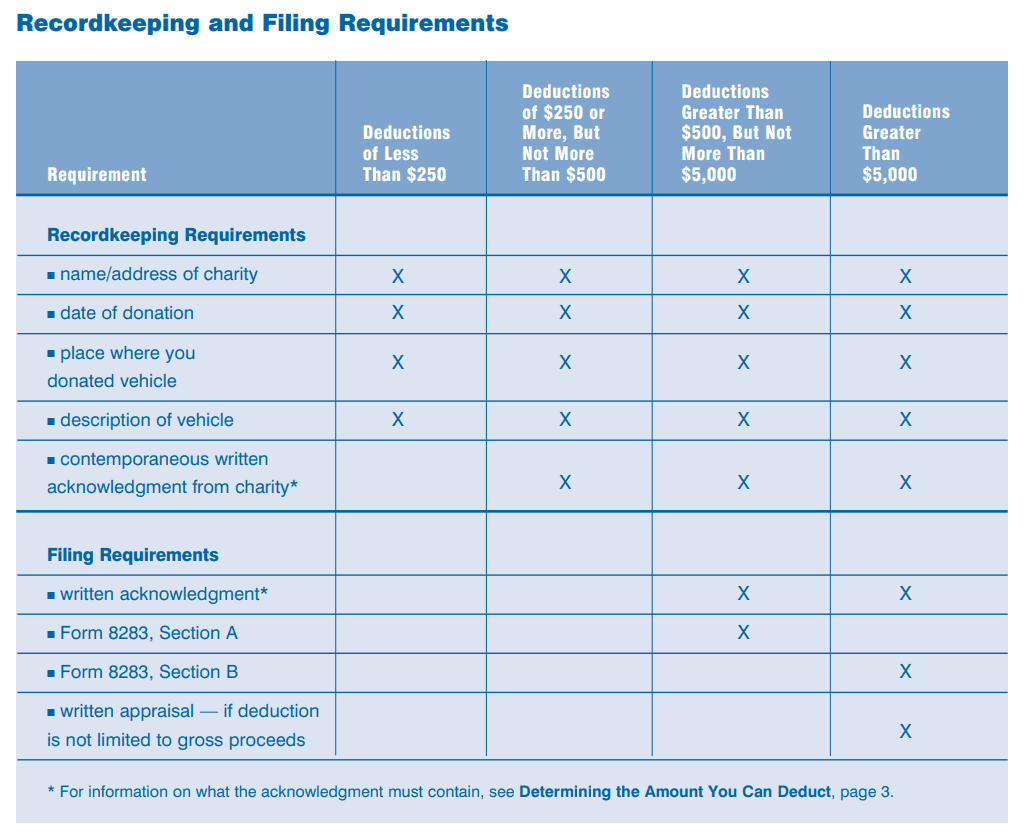
When it comes to non-cash donations, such as car donations, the IRS has specific requirements that you must follow. For example, if the value of the car is more than $500, you must file Form 8283 with your tax return.
6. Keep Accurate Records
It’s essential to keep accurate records of your car donation. This includes the fair market value of the car, the date of the donation, the charity’s name, and the receipt provided by the charity. Keeping accurate records will ensure that you can claim your tax deduction with confidence.
7. Consider the Benefits of Donating a Car
In addition to the tax deduction, there are other benefits to donating a car. For example, it’s an easy and convenient way to get rid of an old car that you no longer need. Additionally, you can feel good knowing that your donation is helping a charitable organization.
8. Understand the Differences Between Cash and Non-Cash Donations
When it comes to tax deductions, there are differences between cash and non-cash donations. Cash donations are deductible up to a maximum of 60% of your adjusted gross income, while non-cash donations are deductible up to a maximum of 50% of your adjusted gross income.
9. Consider the Alternatives to Donating a Car
If you’re not sure if donating a car is the right choice for you, there are other alternatives to consider. For example, you can sell your car and donate the proceeds to a charitable organization. This can be a good option if you’re looking to maximize your tax deduction.
10. Get Professional Advice
If you’re unsure about how to categorize your car donation for tax purposes, it’s always a good idea to seek professional advice. A tax professional or financial advisor can help you navigate the IRS rules and regulations and ensure that you maximize your tax deduction while staying compliant with the law.
In conclusion, donating a car can be a great way to give back to society and help those in need. However, it’s essential to understand the IRS rules and regulations when it comes to categorizing car donations for tax purposes. By following the guidelines outlined above, you can ensure that your car donation is classified correctly and that you receive the maximum tax deduction possible.
Frequently Asked Questions
Donating a car to charity is a great way to give back to the community and receive a tax deduction. However, it can be confusing to determine how to categorize car donation for taxes. Here are some common questions and answers to help you navigate the process.
1. How do I determine the value of my car donation?
The IRS allows you to claim a tax deduction for the fair market value of your car donation. This is the price that a willing buyer would pay for the car and a willing seller would accept, both with knowledge of the relevant facts and neither under any compulsion to buy or sell. There are several resources you can use to determine the value of your car, including online valuation tools, dealer quotes, and appraisals from a qualified professional.
It’s important to note that if the charity sells your car for less than $500, you can claim the fair market value up to $500. If the charity sells your car for more than $500, you will need to include the sale price on your tax return.
2. What documentation do I need to claim a tax deduction for my car donation?
In order to claim a tax deduction for your car donation, you will need to obtain a written acknowledgement from the charity that includes the name of the charity, the date of the donation, and a description of the car. If the car is worth more than $500, you will also need to include Form 8283 with your tax return, which requires an appraisal from a qualified professional. Additionally, you should keep any receipts, titles, and other relevant documentation for your records.
It’s important to note that if you claim a tax deduction for a car worth more than $5,000, you will also need to obtain an independent appraisal and include a copy of the appraisal with your tax return.
3. Can I claim a tax deduction for donating a car that doesn’t run?
Yes, you can still claim a tax deduction for donating a car that doesn’t run. However, the value of the car may be lower than if it were in working condition. If the charity sells the car for parts or scrap metal, you can only claim the fair market value of the parts or scrap metal. You may want to consider donating to a charity that will repair the car and use it for their programs, which may result in a higher tax deduction.
It’s important to note that if the car is not in working condition, you will need to provide documentation to the IRS that shows the car was inoperable when you donated it.
4. Can I donate a car to a family member and still claim a tax deduction?
No, you cannot claim a tax deduction for donating a car to a family member. The IRS considers this a non-deductible gift, even if the family member is a charity or non-profit organization. However, you may be able to claim a tax deduction if you donate the car to a qualified charity and the charity provides the car to the family member as part of their programs.
It’s important to note that if you donate a car to a non-profit organization that is affiliated with your family member, the IRS may view this as a conflict of interest and disallow your tax deduction.
5. How do I choose a reputable charity to donate my car to?
It’s important to do your research and choose a reputable charity to donate your car to. Look for charities that are registered with the IRS as a 501(c)(3) organization and have a good reputation in the community. You can also check with organizations like Charity Navigator or GuideStar to see ratings and reviews of charities.
Before donating your car, be sure to read the charity’s policies and procedures for car donations. Some charities may have specific requirements for the condition of the car or may only accept certain types of vehicles. Additionally, be wary of charities that offer to pick up your car without providing proper documentation or that pressure you to donate immediately without giving you time to research their organization.
In conclusion, categorizing car donations for tax purposes can seem overwhelming at first, but it doesn’t have to be. By following the steps outlined in this article, you can ensure that you’re accurately categorizing your donation and maximizing your tax benefits.
Remember to keep detailed records of your donation, including the value of the car and the charity you donated it to. This will make the tax filing process much smoother and help you avoid any potential issues with the IRS.
Donating a car can not only benefit a worthy cause, but it can also provide you with significant tax savings. So, next time you’re looking to get rid of an old vehicle, consider donating it and taking advantage of the tax benefits that come along with it.

Rakibul Hasan, the CEO and founder of Autosdonation, is an automotive specialist with over a decade of industry experience. With a distinct mastery in car donations, sponsorships, and gifting, Rakibul combines his passion for automobiles and generosity to revolutionize the car donation landscape. He established Autosdonation to facilitate the car donation and gifting process, making it more accessible and enjoyable for all involved.
More Posts