

Rakibul Hasan
Chief Editor of - Autos DonationRakibul Hasan, the CEO and founder of Autosdonation, is an automotive specialist with over a decade of industry experience. With a distinct mastery in car...Read more
Do you have a junk car sitting in your driveway, taking up space and collecting dust? Did you know that you can donate it to a charity and potentially receive a tax deduction? That’s right, not only can you get rid of your unwanted vehicle, but you can also make a difference in someone’s life and benefit from a tax deduction.
By donating your junk car to a charity, you can support a cause you care about while also reducing your tax liability. But how much can you actually deduct on your taxes for donating a junk car? In this article, we’ll explore the ins and outs of tax deductible donating, so you can make an informed decision and potentially save money on your taxes.
How Much Tax Deductible Donating a Junk Car?
When you donate a junk car to a charitable organization, the tax-deductible amount depends on the car’s fair market value. If the car’s value is less than $500, you can claim the fair market value up to $500. If the value is more than $500, you can claim the exact amount the charity received after selling the car. However, if the charity keeps and uses the car, you can claim the fair market value up to $5,000. Keep in mind that you must itemize your deductions to claim the tax benefit.
How Much Tax Deductible Donating a Junk Car?
Donating a junk car is a great way to get rid of an old vehicle while supporting a good cause. However, many people are unsure of how much they can deduct from their taxes for the donation. In this article, we’ll explore the tax-deductible benefits of donating a junk car.
What is a Tax Deduction?
A tax deduction is an amount of money that can be subtracted from your taxable income. This means that if you donate a junk car and qualify for a tax deduction, you can reduce the amount of taxes you owe to the government. The amount of the deduction will depend on several factors, including the value of the car and the organization you donate it to.
When you donate a car to a qualified charity, the IRS allows you to deduct the fair market value of the car. The fair market value is the amount that the car would sell for on the open market. If the car is worth less than $500, you can deduct the smaller of its fair market value or $500. If the car is worth more than $500, you can deduct the actual sale price if the charity sells the car, or the fair market value if the charity keeps the car.
How to Determine the Value of Your Junk Car
To determine the value of your junk car, you’ll need to have it appraised. The appraisal should be done by a professional appraiser who is familiar with the value of junk cars. The appraiser will look at the condition of the car, the make and model, and the current market value of similar vehicles. Once the appraisal is complete, you’ll have a good idea of the fair market value of your car.
Another option is to use an online appraisal tool to get an estimate of the value of your junk car. These tools are easy to use and can give you a ballpark estimate of the car’s value. However, it’s important to note that these estimates are not always accurate and may not reflect the true market value of the car.
Benefits of Donating a Junk Car
Donating a junk car has several benefits, including:
1. Supporting a good cause: When you donate a car to a charity, you’re helping to support their mission and programs.
2. Tax deduction: As we mentioned earlier, donating a car can result in a tax deduction.
3. Free towing: Many charities offer free towing for donated cars. This means that you won’t have to pay to have the car removed from your property.
4. Environmental benefits: Junk cars can be harmful to the environment if they’re not disposed of properly. When you donate a car, it will be recycled or disposed of in an environmentally-friendly way.
Donating a Junk Car vs. Selling a Junk Car
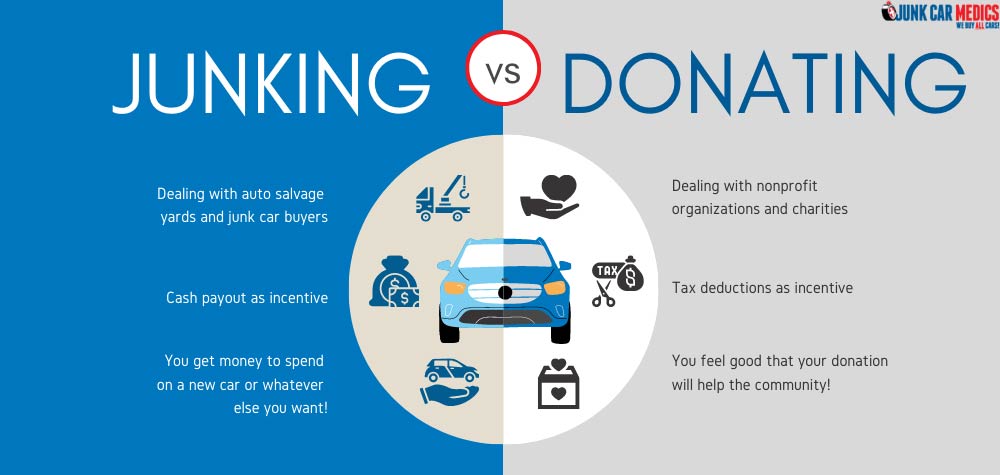
When deciding whether to donate or sell your junk car, there are several factors to consider. If you sell the car, you’ll receive cash for it, but you won’t be able to deduct the sale price from your taxes. If you donate the car, you won’t receive any cash, but you’ll be able to deduct the fair market value from your taxes.
Another factor to consider is the ease of the process. Selling a junk car can be time-consuming, and you’ll need to find a buyer who is willing to purchase a non-running car. Donating a car is typically a more straightforward process, and many charities offer free towing.
The Bottom Line
Donating a junk car is a great way to support a good cause while also receiving a tax deduction. To determine the value of your car, have it appraised by a professional or use an online appraisal tool. Consider the benefits of donating vs. selling your car before making a decision. And remember, when you donate a junk car, you’re helping to make a positive impact on your community and the environment.
Contents
Frequently Asked Questions
Donating a junk car to a charity is a great way to give back to the community and get rid of your old vehicle at the same time. However, many people have questions about how much they can deduct on their taxes when they donate a car. Here are some common questions and answers about tax-deductible car donations.
What is the maximum tax deduction for donating a junk car?
The maximum tax deduction for donating a junk car depends on several factors, including the value of the car and the charity that you donate it to. If the charity sells the car, you can usually deduct the sale price. If the charity keeps the car and uses it for its own purposes, you can usually deduct the fair market value of the car. However, there are some limits to how much you can deduct. In general, you can deduct up to 50% of your adjusted gross income. If you donate a car worth more than this amount, you may be able to carry over the remaining deduction to future tax years.
It’s important to keep accurate records of your donation, including the fair market value of the car and any expenses related to the donation, such as towing fees or repairs. You should also get a receipt from the charity that includes its name, address, and tax ID number.
What is the fair market value of a junk car?
The fair market value of a junk car is the price that a willing buyer would pay a willing seller for the car, assuming that both parties are knowledgeable about the car’s condition and history. This value can vary widely depending on the age, make, model, and condition of the car. To determine the fair market value of your junk car, you can consult a used car guide, such as Kelley Blue Book, or get an appraisal from a professional appraiser.
It’s important to note that if the charity sells the car, you can only deduct the sale price, not the fair market value. If the charity keeps the car and uses it for its own purposes, you can deduct the fair market value.
Can I donate a junk car that doesn’t run?
Yes, you can donate a junk car that doesn’t run. Many charities will accept non-running cars and either sell them for parts or have them repaired. However, if the car is not in running condition, its fair market value will be significantly lower than if it were in good working order. You should also be prepared to pay for towing fees to get the car to the charity’s location.
It’s important to make sure that the charity you donate to is a legitimate nonprofit organization that is recognized by the IRS as tax-exempt. You should also ask the charity about its policies for accepting car donations and whether it will provide a receipt for your donation.
What happens to my junk car after I donate it?
After you donate your junk car to a charity, the charity will typically sell the car or use it for its own purposes. If the car is sold, the charity will usually use the proceeds to fund its programs and services. If the car is kept by the charity, it may be used for transportation, as a work vehicle, or for other purposes.
It’s important to choose a reputable charity that will use your donation in a way that aligns with your values and priorities. You should also ask the charity about its policies for selling or using donated cars and how it will report the sale or use of your car to the IRS.
Are there any tax benefits to donating a junk car?
Yes, there are tax benefits to donating a junk car to a charity. If you itemize your deductions on your tax return, you can deduct the value of your car donation from your taxable income. This can reduce the amount of taxes you owe and increase your refund.
However, it’s important to keep accurate records of your donation and to choose a reputable charity that is recognized by the IRS as tax-exempt. You should also make sure that you understand the limitations on how much you can deduct and how to properly report your donation on your tax return.
In conclusion, donating a junk car can be a great way to give back to your community while also receiving a tax deduction. The amount of the deduction will depend on several factors, including the value of the car and the charity it is donated to. However, it is important to do your research and make sure you are donating to a reputable charity that will use the funds to make a positive impact.
When donating a junk car, it is also important to keep detailed records of the donation, including the fair market value of the car and any expenses related to its donation. This documentation will be necessary when filing your taxes and claiming your deduction.
Overall, while the amount of the tax deduction may vary, the act of donating a junk car can have a significant impact on both the charity and the donor. It is a win-win situation that not only helps those in need but also provides a financial benefit for the donor.

Rakibul Hasan, the CEO and founder of Autosdonation, is an automotive specialist with over a decade of industry experience. With a distinct mastery in car donations, sponsorships, and gifting, Rakibul combines his passion for automobiles and generosity to revolutionize the car donation landscape. He established Autosdonation to facilitate the car donation and gifting process, making it more accessible and enjoyable for all involved.
More Posts