

Rakibul Hasan
Chief Editor of - Autos DonationRakibul Hasan, the CEO and founder of Autosdonation, is an automotive specialist with over a decade of industry experience. With a distinct mastery in car...Read more
Donating a car to charity is a noble act that can help you declutter your garage while helping others in need. However, besides the sense of fulfillment that comes with donating, did you know that you could also get a tax deduction for your donation? Yes, that’s right! You can reduce your taxable income by donating your car to a qualified charitable organization.
But before you rush to donate your car, there are specific requirements you need to fulfill to claim a tax deduction. In this article, we will explore the rules and regulations that govern car donations and how you can maximize your tax benefits. So, buckle up, and let’s get started!
**Can You Get a Tax Deduction for Donating a Car?**
Donating a car to a charity can be a great way to support a cause you care about while also potentially receiving a tax deduction. However, it’s important to understand the rules and requirements surrounding car donations and tax deductions in order to ensure you qualify for the deduction and maximize its value. Here’s what you need to know:
**1. Qualifying for a Tax Deduction**
In order to qualify for a tax deduction for donating a car, you must itemize your deductions on your tax return. This means you’ll need to forgo the standard deduction and instead list out all of your eligible expenses, including charitable donations. Additionally, the charity you donate your car to must be a qualified 501(c)(3) organization, meaning it’s a non-profit organization that meets certain tax-exempt requirements.
**2. Determining the Value of Your Car Donation**
The amount of your tax deduction will depend on the value of your car donation. If the charity sells your car, you can typically deduct the sale price as your charitable contribution. However, if the charity uses your car for its own purposes, such as for transportation or delivering goods, you can typically deduct the fair market value of the car. There are several resources available to help you determine the fair market value of your car, such as Kelley Blue Book or the National Automobile Dealers Association (NADA) guide.
**3. Donating a Car vs. Selling It**
When deciding whether to donate your car or sell it, it’s important to compare the potential tax benefits of each option. While you may be able to sell your car for more money than you would receive as a tax deduction for donating it, selling a car can also come with additional costs and hassle, such as advertising the sale, negotiating with buyers, and handling the paperwork. Donating your car can be a simpler and more convenient option, while also allowing you to support a cause you care about.
**4. Tax Benefits for High-Value Car Donations**
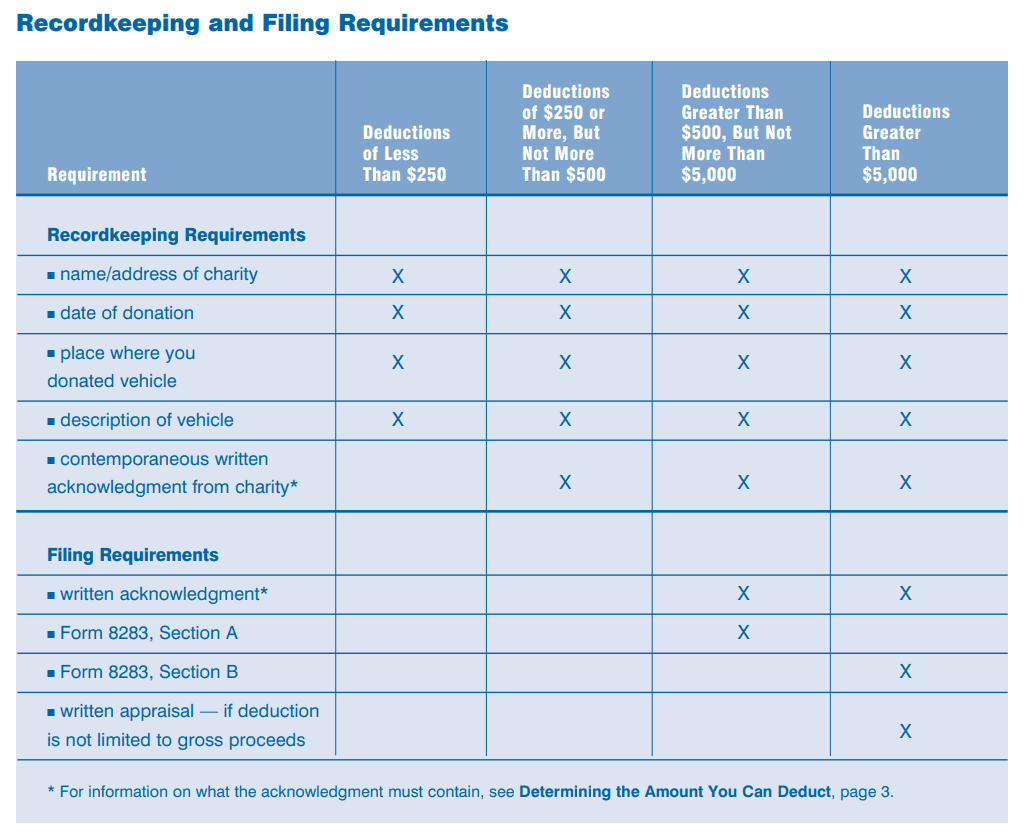
If you donate a car that’s valued at more than $500, you’ll need to include additional documentation with your tax return in order to claim the deduction. This documentation includes Form 8283, which requires a written appraisal of the car’s value, and a copy of the charity’s acknowledgment of your donation.
**5. Restrictions on Car Donations**
There are some restrictions on car donations that can impact your ability to receive a tax deduction. For example, if you donate a car that’s worth more than $5,000, the IRS may require an independent appraisal of the car’s value. Additionally, if you donate a car that’s not in good working condition or that requires significant repairs, the charity may be required to sell the car immediately rather than using it for its own purposes, which could impact the tax deduction you’re eligible for.
**6. Other Tax Benefits of Charitable Donations**
In addition to the potential tax deduction for donating a car, there are other tax benefits of charitable donations that can help reduce your tax liability. For example, if you donate cash or other assets to a charity, you may be able to deduct the full value of the donation, up to a certain limit. Additionally, donating appreciated assets, such as stocks or real estate, can allow you to avoid paying capital gains taxes on the appreciation.
**7. Choosing a Charity to Donate Your Car To**
When choosing a charity to donate your car to, it’s important to do your research and ensure the organization is reputable and effective. Look for charities that have a clear mission and track record of making a positive impact, and review their financial statements and tax filings to ensure they’re using donations responsibly. Additionally, be wary of charities that promise to provide a specific value for your car donation without conducting an appraisal or that pressure you to donate quickly without giving you time to research the organization.
**8. Maximizing Your Tax Deduction**
In order to maximize your tax deduction for donating a car, it’s important to keep detailed records of your donation and expenses. This includes obtaining a written acknowledgement from the charity that includes the date of the donation, the charity’s name and address, and a description of the car. Additionally, keep records of any expenses related to the donation, such as towing or storage fees.
**9. Donating Cars to Family or Friends**
While you may be tempted to donate a car to a family member or friend in need, this can impact your ability to receive a tax deduction. In order to qualify for a tax deduction, the car must be donated to a qualified charity, not an individual. Additionally, if you donate a car to a family member or friend and they sell it, you may be liable for any taxes owed on the sale.
**10. Conclusion**
Donating a car to a charity can be a great way to support a cause you care about while also potentially receiving a tax deduction. However, it’s important to understand the rules and requirements surrounding car donations and tax deductions in order to ensure you qualify for the deduction and maximize its value. By doing your research, keeping detailed records, and choosing a reputable charity, you can make the most of your car donation and make a positive impact on your community.
Contents
Frequently Asked Questions
Donating a car to charity is a noble act, but many people are not aware of the tax benefits that come with it. In this section, we will address some of the commonly asked questions about tax deductions for donating a car.
Q: Can I get a tax deduction for donating a car?
Yes, you can get a tax deduction for donating a car to a registered charity. However, the amount of the deduction depends on the value of the car and the charity’s use of the vehicle. If the charity sells the car, you can deduct the sale price, but if the charity uses the car for its operations, you can deduct the fair market value of the car.
It is important to note that the IRS has tightened the rules for car donations to prevent abuse. To claim a tax deduction, you must itemize your deductions on your tax return and provide proper documentation of the donation, including the charity’s name, address, and tax ID number, as well as a written acknowledgment of the donation from the charity.
Q: What is the fair market value of a donated car?
The fair market value of a donated car is the price that a willing buyer would pay and a willing seller would accept for the car, considering its age, condition, mileage, and location. You can use online valuation tools, such as Kelley Blue Book or NADA Guides, to estimate the fair market value of your car. However, if the car is worth more than $500, you must obtain a written appraisal from a qualified appraiser to claim a tax deduction.
If the charity sells the car, you can deduct the sale price, even if it is less than the fair market value. However, if the charity uses the car, you can only deduct the fair market value, regardless of what the charity does with the car.
Q: Can I donate a car that is not in working condition?
Yes, you can donate a car that is not in working condition, but you may not be able to claim a tax deduction for it. If the car is not drivable, the charity may have to incur towing and storage fees to dispose of it, which reduces the value of the donation. In addition, the IRS requires that you deduct the fair market value of the car, which may be significantly less than the value of a working car.
However, some charities accept non-working cars for parts or scrap, which may increase the value of the donation. Before donating a non-working car, it is advisable to check with the charity about their policies and procedures for accepting such donations.
Q: Are there any restrictions on the charities that I can donate a car to?
Yes, to claim a tax deduction, you must donate a car to a registered charity that is recognized by the IRS as a tax-exempt organization. You can verify a charity’s tax-exempt status by checking the IRS’s Exempt Organizations Select Check database. In addition, the charity must use the car for charitable purposes, such as providing transportation to people in need, rather than selling it for profit.
It is also advisable to research the charity’s reputation and financial accountability before donating a car. Some charities may have high administrative costs or engage in questionable practices, which may reduce the value of your donation.
Q: What are the alternatives to donating a car for a tax deduction?
If you cannot donate a car or do not want to deal with the paperwork and restrictions of a car donation, there are other ways to get a tax deduction for charitable giving. You can donate money or property, such as stocks, bonds, or real estate, to a registered charity. You can also volunteer your time or services to a charity, although you cannot claim a tax deduction for your time or services.
Before making a charitable donation, it is advisable to consult with a tax professional or financial advisor to determine the best strategy for your individual circumstances.
In conclusion, donating a car can be a great way to give back to your community and help those in need. Not only does it provide a valuable resource for organizations, but it can also give you a tax deduction if you meet certain requirements.
However, it’s important to ensure that you’re donating to a legitimate organization and that you understand the rules and regulations surrounding tax deductions for car donations. Make sure to do your research and consult with a tax professional before making any donations.
Overall, donating a car can be a rewarding experience both for you and the organization that receives it. So, if you have a car that you no longer need or use, consider donating it to a worthy cause and potentially receiving a tax deduction in the process.

Rakibul Hasan, the CEO and founder of Autosdonation, is an automotive specialist with over a decade of industry experience. With a distinct mastery in car donations, sponsorships, and gifting, Rakibul combines his passion for automobiles and generosity to revolutionize the car donation landscape. He established Autosdonation to facilitate the car donation and gifting process, making it more accessible and enjoyable for all involved.
More Posts